





In personal injury law, the firm with the best attorneys does not reliably win. The firm with the best operations does. This is the uncomfortable truth the profession rarely says out loud, because it cuts against the identity of the work. Cases are assumed to be won on legal skill, in negotiation and the courtroom, when in reality the outcome is largely determined before the legal work begins – by which firm answered the phone first, followed up fastest, and made the client feel seen throughout.
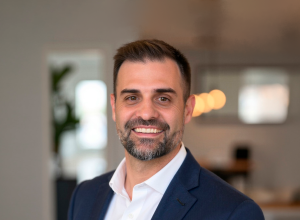
Eamon Graziano, Fractional Chief Operating Officer and Founder of B&E Management and Consulting, a Marine Corps veteran with a Master of Business Administration from the University of Southern California Marshall School of Business, has spent the last several years helping plaintiff firms scale from local shops into multi-million-dollar operations by fixing exactly this. He argues that operations, not lawyering, is the real competitive battleground in personal injury, and AI is the first tool that lets a firm win it at scale.
The Case Is Won at First Contact, Not in the Courtroom
The single most decisive moment in a personal injury case happens before the firm has done any legal work at all. It is the first contact with the lead, and the window is brutally short. Leads contacted within five minutes are 300% more likely to convert, which means the firm that responds in seconds captures clients rather than the firm that responds in hours – regardless of which company has the better trial record. Speed at intake is not a customer service nicety, but rather the mechanism that determines which firm gets the case in the first place.
This is why the economics of intake have shifted decisively toward automation. AI intake agents now answer the phone around the clock, qualify the lead, gather the facts of the accident, and in some cases sign the client on the spot, closing the response gap that human staff structurally cannot. “I’ve seen firms double their sign-up rates simply by implementing an AI agent that responds in seconds,” Graziano notes. The firms still treating intake as a staffing problem are losing cases in the gaps between business hours, and they rarely see the leads they never converted.
The Profession’s Biggest Failure Is Communication, and It Is Fixable
The most revealing statistic in personal injury has nothing to do with case outcomes. The number one bar complaint in the field is a lack of communication with clients. Not incompetence or malpractice, but clients left in the dark about their own cases. This is an operational failure rather than a legal one, and it damages firms twice, eroding client trust during the case and producing the negative reviews that suppress future intake after it.
AI resolves the failure at its root by removing the human bottleneck that causes it. Smart workflows now send clients automatic case updates, treatment reminders, and milestone notifications, so clients stay informed without a staff member manually placing every call.
The effect runs in two directions at once. Clients feel seen and stay engaged, while paralegals and case managers stop drowning in the status calls that consumed their capacity, freeing them for work that actually advances cases. The reviews improve because the most common reason for a bad one has been engineered out of the process. A firm that solves communication is not just reducing complaints; it is also converting its single biggest liability into a source of referrals and reputation.
A Modern Firm Is Run on Data, Not Instinct
Most firms cannot say with precision where they are losing money, because the leaks are invisible without measurement. AI dashboards now track close rates, intake response times, case value, and attorney capacity in real time, which turns a vague sense that something is off into a precise map of where leads are escaping the funnel. A firm that can see exactly where its conversion breaks down can fix the specific failure rather than guessing.
This visibility is where the hidden money lives. The gap between leads generated and clients signed, the slow response times, the cases mismatched to attorney capacity, each is a leak that costs revenue invisibly until a dashboard makes it measurable. “When you can see exactly where leads are leaking out of your funnel, you can plug those holes,” Graziano explains, and the recovered revenue from doing so reaches seven figures for firms that had no idea it was escaping.
The future of personal injury belongs to firms that treat AI as a teammate rather than a threat, because the competition was never really about who had the better attorney. It was about who built the better operation, and AI is what finally lets a firm win on that ground at scale.
Follow Eamon Graziano on LinkedIn for more insights on law firm operations, AI implementation, and scaling personal injury practices into modern, data-driven operations.