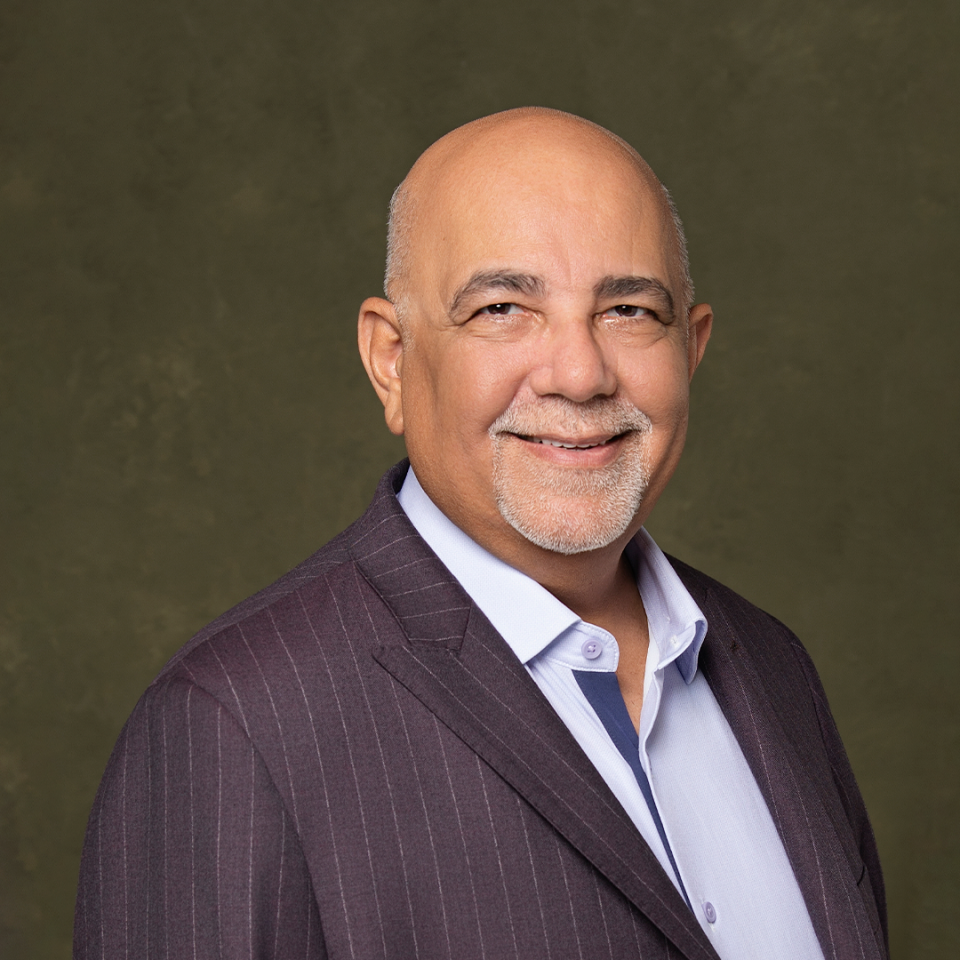





Every large enterprise has an operating model that looks defensible in a slide deck. Functions are boxed, regions are mapped, reporting lines are drawn with clean right angles. The document survives until something tests it: an acquisition closes, a regulator asks a question nobody has a ready answer to, or cost growth outruns revenue growth for three quarters in a row. Bomsi Billimoria, Founder and Chief Executive Officer of EvoXvantage, has spent more than 25 years designing and running these models inside some of the world’s largest financial institutions, and his diagnosis cuts against how most organisations approach the problem. The failure hardly ever sits inside a function. It sits in the space between them, in the handoffs nobody owns, and that is precisely the territory conventional restructuring leaves untouched.
Design For The Gaps, Not The Boxes
Finance, operations, compliance, IT, legal, HR, and procurement each run their own processes, their own data and their own priorities. Add a country and you add another layer of all three. Most transformation programs respond by optimizing each box in turn, which is comfortable work because every function can be improved in isolation and every improvement can be measured. The trouble is that the cost, the risk, and the delay are not inside the boxes. “The cost, the risk, and the delay sit in the handoffs between them,” Billimoria says. A compliance review that waits four days for a document from legal is not a compliance problem or a legal problem. It belongs to nobody, which is why it persists through restructuring after restructuring.
That is also where the real upside hides. When Billimoria brought three separate financial firms under a single operating model, the gain did not come from consolidating headcount or rationalizing systems in the usual sense. “The real gain came from putting those teams in front of the same picture for the first time,” he says. The phrasing matters. Not a shared dashboard, not a new reporting line, but a shared view of how work moves end to end. Across his career, the cumulative result of this approach has been over $20 million in annual savings and a 30% reduction in total operating costs, numbers that come from eliminating friction between functions rather than squeezing any one of them harder. Executives who insist on attributing savings to a single department tend to miss this entirely, because the benefit never lands neatly in one budget line.
Follow The Work, Not The Opinions
The second discipline is harder than it sounds, because it requires leaders to stop trusting their own account of how their organization operates. Redesigns typically begin with a workshop in which senior people describe the current state and then sketch the future state. What gets described is the process as it was designed, not the process as it is performed. Billimoria’s instruction is blunt. Before you restructure anything, follow the actual work. “Where does it stop, loop back, or wait on a signature?” he asks. Those three questions are a more honest audit than most target operating model exercises produce, because they look for evidence of delay rather than opinions about efficiency.
The results of working that way are not marginal. At a global investment bank, Billimoria led the re-engineering of front-to-back workflows and compressed new product launches from 90 days to 20. Automation applied afterwards cut transaction processing time by 40%. The sequence is the point. The workflow was re-engineered first, on evidence, and automation came second. Reverse the order and a company buys technology that accelerates a broken path, which is how organizations end up with faster versions of the same bottlenecks and a capital expenditure line they cannot justify when the cycle time barely moves. Evidence-led redesign is slower to start and considerably cheaper to finish.
Build For Adoption Or Watch The Savings Return
The third failure mode is the one that embarrasses finance teams a year after the program is declared complete. A model only holds if people adopt it, and adoption is not a communications exercise bolted onto the end of a project plan. When Billimoria built the first offshore delivery center in Bangalore for a global financial institution, the savings held because the work did not stop at the design. “I invested in governance, training, and clear ownership,” he says. Each of those is straightforward, and each is routinely cut when a program runs long or over budget, on the assumption that the structural change has already done the work.
It has not. “Without that, the numbers drip back within a year,” Billimoria says, and the word “drip” is well chosen. Savings rarely collapse in a single visible failure. They erode through workarounds, through a manager quietly reinstating a review step, through a team reverting to the system they know because nobody owns the new one. By the time the erosion registers in the numbers, the original project team has dispersed, and the cause is impossible to isolate. This is the strongest argument for treating adoption as the deliverable rather than the design. Three principles carry the whole model: design for the gaps, follow the evidence, and make the change stick. Any leader who runs a function, or who answers for how several of them work together, is holding a model that will eventually be tested on all three.
Connect with Bomsi Billimoria on LinkedIn for more insights on global operating model design, cost transformation, and cross-functional governance.