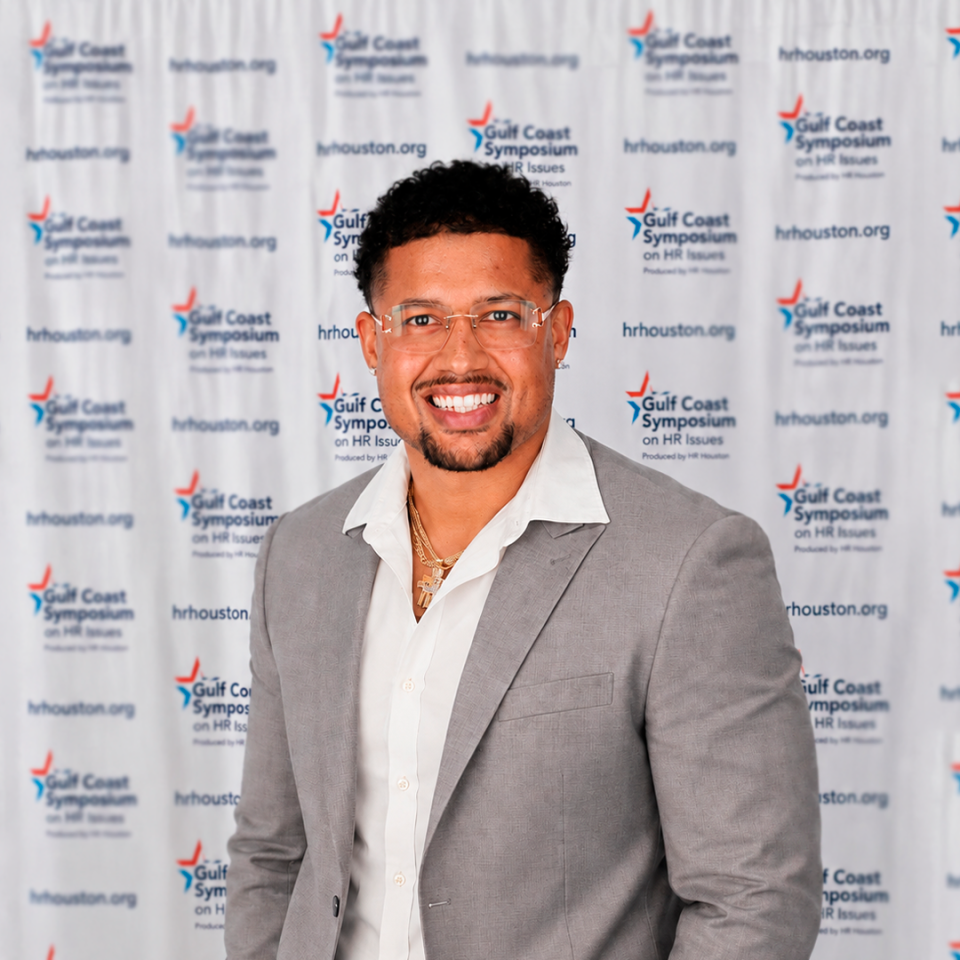





Hiring is one of the few high-value decisions in a business still routinely made without a method. Capital expenditure gets a committee, a model, and a paper trail. Procurement gets a scoring matrix. But the decision to bring a person onto a crew, a site, or a leadership team frequently comes down to whichever manager happened to be in the room and how the conversation felt. Jeff Dumé, Founder of BuildFit AI and Mainframe Solutions, spent five years recruiting across construction, and operationally complex industries watching the same failure repeat itself: different interviewers, different questions, different expectations, and no shared definition of what a good candidate looked like. The damage from that is not visible at the point of decision. It arrives later, disguised as turnover, disguised as a productivity problem, disguised as a team that will not gel. By then the money is gone and nobody can reconstruct why the hire was made in the first place.
The Cost Nobody Puts on the Balance Sheet
Most organizations price a bad hire at the salary they paid out and stop there. That number is close to meaningless. The real cost includes the productivity that never materialized, the disruption absorbed by the surrounding team, and the time and expense of running the search again. In Dumé’s framing, the losses compound quietly, which is exactly what makes them dangerous. Nobody flags a mis-hire in week one. The gaps surface months later, when a supervisor is covering for a role that is not performing and the schedule has already slipped.
The scale of the problem is not marginal. Dumé points to studies showing employers admit to mis-hiring in 74 percent of cases. Read that as an operational statistic rather than a curiosity, and the conclusion is uncomfortable: unstructured hiring is not an occasional stumble, it is the default state of the process. “Without structured evaluation, you’re making high-stakes decisions with incomplete information,” Dumé says. Incomplete is the operative word. The information exists; however, most interview processes are not designed to collect it in a form anyone can compare.
Consistency is the Control, Not the Constraint
The instinct among experienced managers is to resist structure. Good hiring, the argument goes, is a read on a person, and a script gets in the way of that read. Dumé’s position inverts the logic. Structure does not replace the read, it makes the read comparable across interviewers. When hiring managers define what success looks like in a role before anyone sits down with a candidate, when every candidate faces the same questions, and when responses are assessed against the same criteria, the organization gets something it almost never has: a like-for-like comparison rather than a collection of unrelated impressions.
What that produces is documentation, and documentation changes the character of the decision. “Every hiring decision becomes defensible, not just a hunch,” Dumé says. That matters commercially as much as it does legally. A defensible decision can be reviewed, challenged, and learned from. A hunch cannot. When a hire underperforms in a structured process, the organization can trace back to the criterion that was mis-weighted or the signal that was missed and correct it for the next role. When a hire underperforms in an informal process, the only available lesson is that someone got it wrong, which teaches nobody anything. Consistency, in other words, is what converts hiring from a series of one-off gambles into a system that improves.
Where the Machine Stops and the Manager Starts
The obvious anxiety around applying AI to hiring is that judgment gets outsourced to a model nobody in the building can interrogate. Dumé draws the boundary deliberately and early. “I built this solution to support leadership judgment, not replace it,” he says. The technology analyzes candidate responses and surfaces structured insights. The decision stays with the people accountable for the outcome. That distinction is not a hedge, it is the design principle. A tool that renders verdicts creates a new category of risk: opaque decisions the organization cannot explain or defend. A tool that organizes evidence removes risk instead of relocating it.
The framing also reflects where the real bottleneck sits. The problem in most hiring processes is not that managers lack judgment. It is that their judgment is applied to inconsistent, poorly captured inputs, so two capable people evaluating the same candidate arrive at different conclusions for reasons neither can articulate. Fix the inputs and the existing judgment gets sharper without anyone needing to be replaced. “AI becomes a tool for consistency and risk reduction, exactly what operationally complex organizations need,” Dumé says. That last qualifier deserves weight. In sectors where roles are technically demanding and a single wrong placement disrupts a schedule or a site, the tolerance for hiring variance is lower than most leadership teams behave as though it is. Standardizing how candidates are evaluated is not an HR refinement. It is an operational control, and organizations that treat it as one stop paying for the same mistake repeatedly.
Follow Jeff Dumé on LinkedIn or visit BuildFit AI for more insights on structured hiring frameworks, mis-hire risk, and evaluation consistency across operationally complex organizations.