





In education, you are not scaling a product. You are scaling trust. That single difference is why growth strategies borrowed from other industries fail here. In most sectors, scaling is a distribution problem: build something good, get it in front of more people. Education refuses that logic, because the thing being multiplied is a family’s or an institution’s trust about something they care more deeply about than anything else they might buy. In this sector, trust does not copy-and-paste across markets the same way in which a product does.
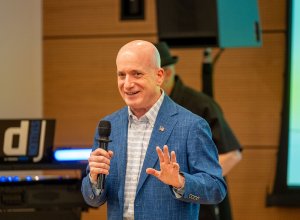
Shannon Penrose, Partner and Chief Executive Officer of Growing Brilliant, one of the leading live virtual preschools in the U.S., has spent 30 years watching it happen. “Companies that chase a single path to market usually hit a ceiling,” she states. “Real scale requires growing across multiple fronts with discipline.” That discipline starts with knowing that trust, not product, is what you are actually trying to multiply.
Earn the Outcome Before You Earn New Territory
Most education companies are chasing three markets at once before owning one. They pursue breadth before securing depth and end up spread thin across markets where they have not yet proven they can deliver. Penrose’s first principle is to get one thing working before building the next. Find where the company wins, establish retention and operating rhythm there, and let that foundation earn the credibility to expand. The test for whether the foundation exists is harder than most leaders expect.
She points to Robert Scrub’s definitive work on why members leave, and the finding that catches people off guard. Members rarely leave because the product has gotten worse. They leave because they were never connected to the outcome they came for. So the question that needs expansion is blunt: ‘Are the people already signed up to the company getting the results they expected?’ Until that answer is yes, opening a new market only multiplies a gap that the company has never closed.
The Same Product Demands a Different Conversation in Every Market
The product may be identical from one market to the next. The sale never is. How trust gets built depends entirely on who is extending it, and selling to a parent is nothing like selling to a school superintendent. The proof points differ, the decision timeline differs, and the conversation runs on different terms even when the product is the same.
This is why leaders who win new territory do not parachute in with a pitch. They study the market first, learning who holds the relationships and how decisions actually get made. Penrose is direct about the stakes. “Education is a relationship business,” she explains, and a district leader who signs a contract is not buying a product. They are trusting the company with something that matters deeply to them, and that trust has to be earned before anything is asked of them.
Build the Relationships That Take You Where You Cannot Go Alone
No education company reaches every child on its own. The ones that grow substantially extend their reach through relationships that carry them into places their own efforts cannot go. Penrose points to Growing Brilliant’s Bridge Project, launched to reach children hospitalized with zero developmental support, a reach made possible by partnership rather than by the company acting alone.
Those relationships are the multiplier, the mechanism that carries a mission past the edge of what any single organization can do. That is the throughline across all three principles, and it returns to where it began. Growing across markets in education was never about doing more. It is about doing the right things in the right order, with the right people beside you.
Follow Shannon Penrose on LinkedIn for more insights on scaling education companies, multi-channel growth, and building the trust and relationships that turn mission into lasting reach.