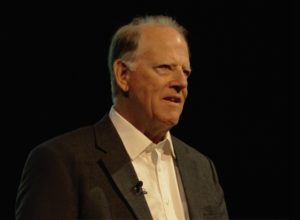






The real cyber risk in most organizations is not on the network. It is in the boardroom. Three hours of committee work, 80 pages of material, every item approved, and when someone asks what was actually decided, the room goes quiet. That silence represents a governance failure that no threat intelligence platform can fix. Maman Ibrahim, Founder of The Decision Layer, has spent 20+ years in cyber risk, audit, resilience, and AI governance across pharma, manufacturing, and regulated environments, sitting beside risk officers, chief information security officers (CISOs), and audit chairs at the moment consequential decisions get made.
What he has observed consistently is that the quality of a security function is not measured by the sophistication of its threat intelligence. It is measured by the quality of the decisions it enables. “Make the risk make sense, work from one truth, and capture the decision as it happens,” Ibrahim states. “That is how cyber leadership earns board confidence.”
The Board Cannot Decide What It Cannot Understand
Technical risk assessments are not decision-ready inputs for a board. They are inputs for a security team. The board needs something categorically different: the exposure translates into a business decision with a clear cost, a forced choice, and a defined consequence for waiting. That translation is the work of leadership, not a communications function tacked on at the end of a preparation process never designed to produce it.
When a security leader presents cyber risk in a way that enables the board to understand what they are being asked to decide and to actually make that decision in the room, the function has delivered genuine value. When the presentation produces deferred action and polite nodding, the exposure has not changed; only the appearance of governance has. Boards make decisions they understand. Security leaders who internalize that responsibility stop presenting information and start producing decisions.
Fragmented Risk Pictures Produce Fragmented Decisions
When different teams work from different risk frameworks, taxonomies, and versions of the exposure picture, board time is consumed reconciling those differences rather than resolving them. The debate about which number is right then replaces the decision about what to do about it, and the meeting ends with more questions than it started with.
A single, unified risk picture eliminates that dynamic. When all relevant parties start from the same point, the conversation moves directly to a decision. “Clarity is leverage,” Ibrahim reflects. Building that unified picture requires deliberate upstream work, but the return is immediate. Boards that receive consolidated, coherent risk information move faster, decide with greater confidence, and hold security leadership in higher regard because the function is visibly making their governance responsibilities easier, not harder.
The Record That Holds When Memory Fails
Regulatory scrutiny does not arrive when a decision is fresh. It arrives when institutional memory has degraded, personnel have changed, and the context that made a decision sensible is no longer easily reconstructed. The question a regulator asks about a year-old decision is a question that memory reliably fails to answer with the precision governance requires.
Strong cyber leaders solve this problem at the moment of decision, not in the aftermath. Producing audit-grade evidence of what information was presented, what options were considered, and what was agreed upon in real time, as the decision is being made, creates a record that holds regardless of what changes afterwards. That discipline is not administrative overhead. It is the governance standard that separates leaders who can demonstrate sound judgment under scrutiny from those who can only hope the scrutiny never arrives.
Follow Maman Ibrahim on LinkedIn for more insights on cyber risk governance, board-level decision-making, and building the leadership discipline that turns security conversations into confident, defensible decisions.