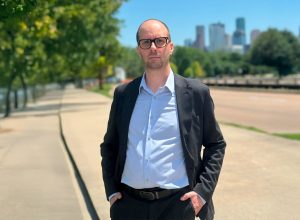





In healthcare innovation, speed is often celebrated. New technologies promise earlier detection, faster decisions, and scalable impact. But in diagnostics, speed without responsibility is not progress. Lives are at stake, and trust is the real currency. “I believe that technology should do more than advance,” says Frederic Scheer. “It should save lives and shape a more sustainable future.” Scheer is the CEO and co-founder of Alercell, an AI-powered molecular diagnostics company focused on transforming cancer detection. His career sits at the intersection of biotech, sustainability, and innovation, and that perspective has shaped a clear philosophy. Diagnostics must be built not only to function, but to earn trust.
Build For Real-World Impact, Not Breakthroughs
Scheer’s ventures begin with tangible problems. At Alercell, the mission is direct and urgent. Deliver faster, more accurate, and earlier diagnosis of leukemia and non-small cell lung cancer to save lives worldwide. The aim is not innovation for its own sake, but meaningful clinical impact.
That emphasis on real-world outcomes also defines Scheer’s earlier work. “From launching Alercell to founding Cereplast, I’ve consistently focused on solving real-world problems,” he explains. At Cereplast, one of the earliest pioneers in bioplastics, the challenge was environmental sustainability at industrial scale. The company raised more than $150 million, secured 17 patents, built two manufacturing plants, and ultimately listed on NASDAQ. The industries differ, but the principle remains consistent. Innovation matters only when it changes outcomes beyond the lab. In diagnostics, that means shortening time to diagnosis, improving accuracy, and enabling clinicians to act sooner with confidence.
Lead Science-Driven Innovation with Operational Discipline
Ethical diagnostics require more than intent. They demand scientific rigor and leadership grounded in deep technical understanding. “I believe in leading with data and learning,” Scheer says. He pursued advanced study at Harvard Medical School in genetics and precision oncology and at MIT in AI in healthcare. This foundation allows him to bridge disciplines that are often siloed. Scientific discovery, product development, regulatory demands, and business execution must advance together.
In AI-powered diagnostics, that integration is essential. Models influence clinical decisions, and opaque systems can erode confidence among clinicians, regulators, and patients. Scheer’s approach prioritizes explainability, validation, and continuous learning. Innovation must move quickly enough to matter, while remaining controlled enough to be safe.
Commit to Purpose Beyond Profit
For Scheer, responsibility extends beyond company building. “Impact doesn’t stop at the lab or the boardroom,” he says. As chair of the Scheer Foundation, he focuses on food security and economic empowerment in Africa. The work reflects a broader view of leadership, where success is measured not only by financial returns but by lasting societal outcomes. That perspective shapes how diagnostic ventures are led. Sustainable impact requires solutions designed to endure. This means building businesses that scale responsibly, operate transparently, and earn trust across healthcare systems.
In diagnostics, ethical responsibility emerges through difficult decisions. When to deploy new capabilities. How to communicate uncertainty. Where to draw boundaries between innovation and caution. These choices directly affect patients and clinicians who depend on the tools. Scheer’s answer is clarity of purpose. Whether advancing cancer detection or supporting global development, the objective remains the same. “In everything I do, I aim to combine vision with execution, science with purpose,” he says.
Ethical Leadership as a Competitive Advantage
The pressure to move fast in healthcare will only intensify. AI, molecular diagnostics, and data-driven medicine are reshaping what is possible. In that environment, ethical leadership is often framed as a limitation. Scheer sees it as an advantage. When innovation aligns with integrity, trust grows. Clinicians adopt tools more readily. Regulators engage more openly. Partners commit for the long term. Ethical responsibility becomes a driver of scale, not an obstacle.
“We don’t just build companies,” Scheer says. “We change lives.” In diagnostics, that ambition carries real weight. It calls for leaders who recognize that saving lives requires more than technology. It requires judgment, discipline, and a steady commitment to doing what is right, even when it is difficult.
Follow Frederic Scheer on LinkedIn for more insights.