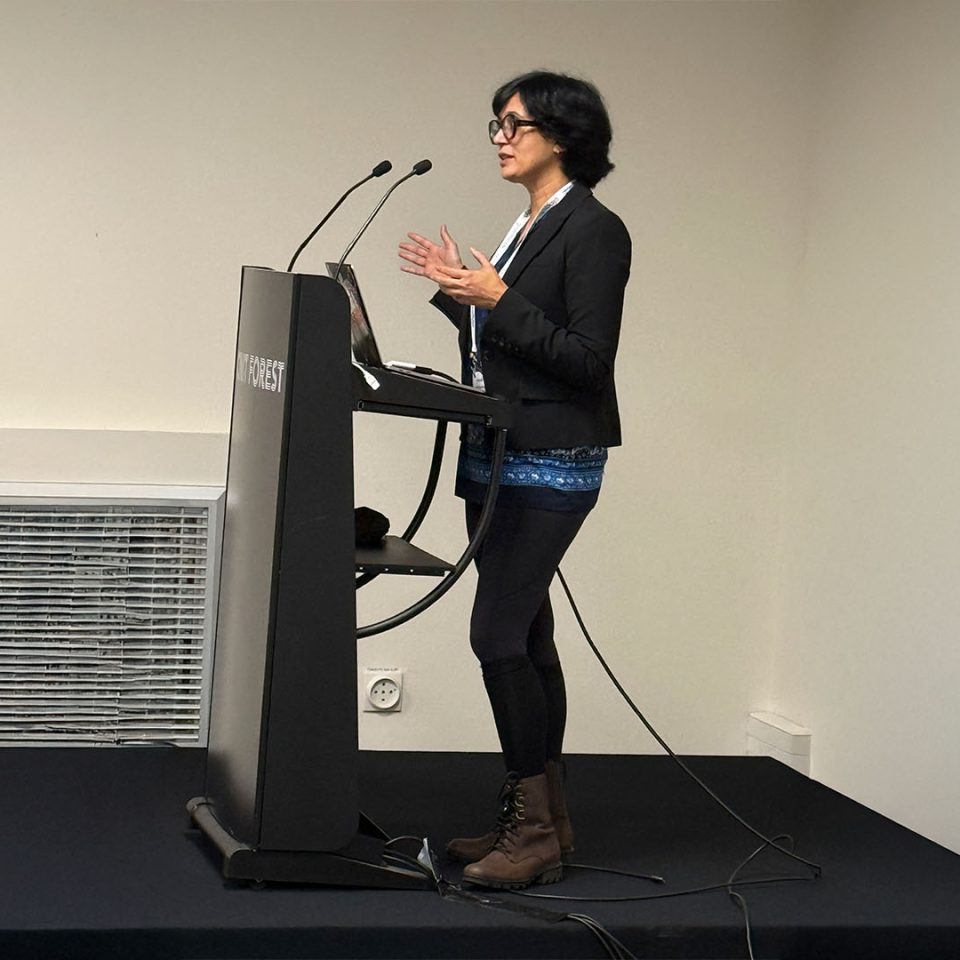






Most tech leaders optimize existing processes. Anubha Gaur questions why those processes exist in the first place. After 25 years leading transformations across Fortune 100 companies, from DevSecOps and SRE to API strategy and AI-driven QA, she’s learned that real disruption starts not with better execution but with better questions.
As the Executive Director at Quest Diagnostics, Gaur has seen organizations invest millions to improve workflows that shouldn’t exist. They optimize manual validations instead of questioning why validation requires humans. They treat security as a gate instead of an accelerator. They build teams that follow change rather than lead it. Gaur’s approach is different. Instead of fixing broken systems, redesign them. Instead of managing innovation, build cultures where it happens without permission. Instead of letting security slow down delivery, embed it so deeply that speed and safety become inseparable.
Question What Everyone Else Accepts
Disruption doesn’t begin with new technology. It begins when leaders stop asking “how do we fix this?” and start asking “why does this exist in the first place?” When Gaur led an AI-driven test automation initiative, her team could have optimized existing test scripts and declared victory. Instead, they questioned whether manual validations were necessary at all. That fundamental reframe eliminated 25% of testing effort entirely and gave engineers time back to innovate instead of validate.
“We didn’t just optimize the script. We questioned the need for manual validations altogether,” Gaur explains. Teams that were spending weeks on regression testing suddenly had the capacity to experiment with new features, explore edge cases, and build capabilities. This approach requires comfort with discomfort. Most organizations reward optimization because it feels safe. Questioning foundational assumptions feels risky. But optimization has limits. A flawed process can only be improved so much. Redesign has no ceiling.
Build Teams That Lead Change
Innovation doesn’t live in job titles. It lives in cultures where people feel ownership over solutions, not just the execution of tasks. At CVS Health, Gaur built an API Center of Excellence that gave developers tools and autonomy to own their solutions end-to-end. Instead of centralized teams controlling API standards and forcing adoption, developers had frameworks that let them move fast without breaking things.
“Innovation doesn’t live in the job titles. It lives in the culture,” Gaur emphasizes. “Creative leadership means building teams that aren’t afraid to question, fail, or explore.” The result wasn’t just better APIs or faster deployments, though both improved measurably. It was a workforce that initiated change instead of waiting for directives. They spotted problems early because they felt responsible for outcomes, and they experimented boldly because failure was positioned as learning rather than a career risk. This cultural shift doesn’t happen through mission statements. It happens when leaders give teams real autonomy.
Turn Security Into an Accelerator
Security and site reliability engineering get treated as necessary evils. Gaur learned that framing is backwards. Done right, they’re accelerators that enable speed precisely because they eliminate risk. At Quest Diagnostics, operating in a highly regulated environment where mistakes carry enormous consequences, Gaur’s team embedded DevSecOps directly into delivery pipelines. Not as an afterthought. Not as a separate team that reviews code before release. Built in from the start, so security becomes automatic.
“DevSecOps is a mindset. It is a culture shift,” Gaur explains. “It’s more lightweight governance. It’s turning the culture more into empowerment, so it’s not becoming just the gate. It is how we stay fast and safe even in a regulated industry.” The traditional model treats security as a gate: slow, centralized, risk-averse. The embedded model treats it as guardrails: automated, distributed, enabling. Teams don’t slow down waiting for security reviews. They build securely by default because the tooling and processes make secure development easier.
Leading by Disruption
After 25 years of modernizing how Fortune 100 companies build, secure, and scale digital platforms, Gaur’s framework is direct: question foundational assumptions everyone else accepts, build cultures where teams lead change instead of following it, and turn traditional blockers like security into structural accelerators. Organizations that master this move differently. They innovate from the bottom up instead of the top down. Don’t just lead. Disrupt. Ask the hard questions. Empower the brave answers.
Connect with Anubha Gaur on LinkedIn for insights on creative leadership in enterprise tech.