
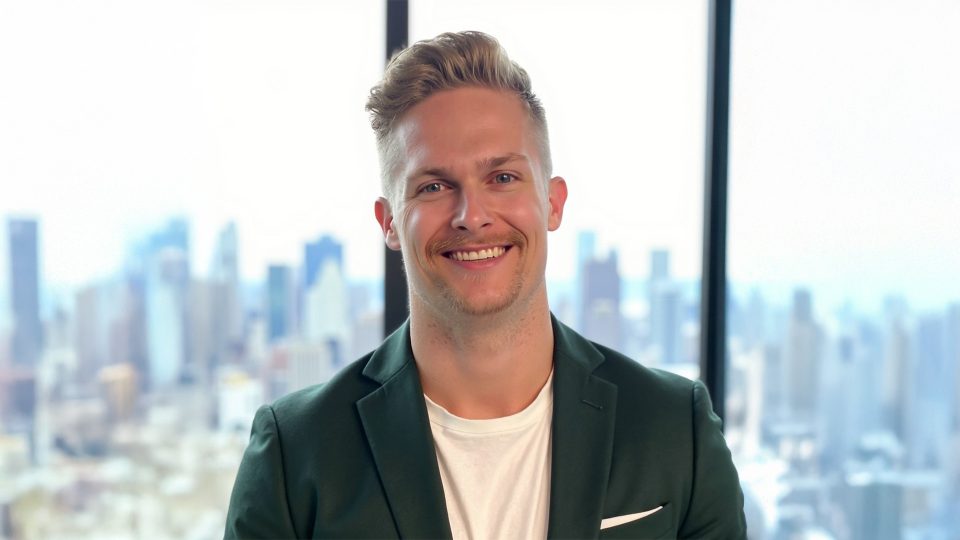





Most entrepreneurs do not fail because their business idea was weak. They stall because the company they built to buy back freedom slowly turns into another job. Days fill with operational fires, employee questions, customer issues, and cash management. Growth feels harder than it should, and the excitement that once fueled the journey begins to fade. “I’ve definitely been there,” says Farooq Cheema, president and founder of ForgeScale and the force behind multiple ventures. “Almost every business owner goes through this phase of growing their business. The good thing is there is a way out of it.”
Over the course of his career, Cheema has acquired and exited more than 20 businesses and founded dozens more. His perspective sits at the intersection of engineering discipline and entrepreneurial ambition, and that combination shapes how he helps leaders escape stagnation and build scalable companies.
When the Business Becomes the Bottleneck
The first challenge Cheema sees is psychological. Early on, the business represents independence, control, and possibility. Once survival mode fades, however, many founders begin to feel flat. “Revenue is stable. Cash flow is healthy. Yet the business no longer stretches you, and without a new challenge, motivation drops,” he explains. Many founders misinterpret this as laziness or a loss of drive. Cheema’s advice is straightforward: redefine the challenge. Seek peers operating at a higher level. Step into advisory roles. Create impact beyond the daily demands of operations.
Delegation Is Not Enough
The second trap is operational. Founders often say they want to step back, but their actions tell a different story. “You approve every payment, resolve every customer escalation, and jump in whenever something feels uncomfortable,” Cheema notes. “This is rarely about your team being incapable. More often, it is about unclear authority and missing systems. Employees are not empowered because they were never given true ownership, training, or permission to act. Real empowerment requires intention, clear processes, and the discipline to let others make mistakes without stepping in to fix them.
Engineering Thinking Applied to Leadership
Cheema approaches entrepreneurship the way an engineer approaches a system. Problems are not abstract frustrations. They are systems with inputs, constraints, and outputs. “If motivation has disappeared, maybe you have already conquered one mountain and have not chosen the next. If the team cannot step up, maybe expectations and authority are not defined. Burnout is a signal, not a failure.” Leaders must assess honestly whether they are still playing the right role. In some cases, the business needs a different kind of leader at its next stage. In others, the founder needs to reintroduce challenge by operating in a larger arena, becoming a smaller fish in a bigger pond.
The Cost of Staying Stuck
Stagnation is not neutral. When founders remain trapped in operational overload or motivational drift, the business pays the price. Decision quality declines. Teams disengage. Growth slows. Burnout becomes unavoidable. Cheema’s solution combines self-awareness, system design, and leadership evolution. “You may feel stuck, but it is solvable. Realign your role, empower your teams, and reconnect with meaningful challenge. Momentum returns, and you become a better leader and business owner on the other side.” Entrepreneurship should not feel like a life sentence. When engineering discipline meets entrepreneurial vision, businesses scale, and founders regain the freedom they set out to build.
Follow Farooq Cheema on LinkedIn.