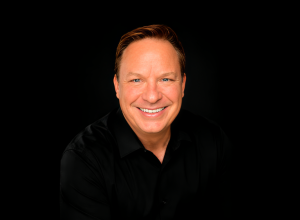





Most investors can answer the question “How much risk can you handle?” in about four seconds, but few realize they’ve answered the wrong question. The number that comes out of a standard risk questionnaire describes a feeling. It says nothing about whether the balance sheet underneath that feeling could survive a drawdown at the wrong moment. Gregory “Greg” Matthews, an investment advisor representative with more than 35 years in the financial industry, argues that collapsing these two ideas into one is among the most common mistakes he encounters, and the consequences land hardest on people who look, on paper, like they are doing everything right: corporate executives, entrepreneurs, and high earners whose wealth is concentrated, illiquid, or both. “How you feel about risk and how much risk your financial life can actually absorb are two different things,” Matthews says. The gap between those two measures is where plans quietly fail.
Temperament Is Data, Not Weakness
The financial industry has an uneasy relationship with emotion. It treats investor anxiety as a bug to be coached away rather than a variable to be measured and designed around. Matthews takes the opposite view. Risk tolerance, as he defines it, is temperament, and temperament is information. “This is the emotional side,” he says. “How you sleep when the market drops 15%. Whether you check your account every day or once a quarter. It is personal, it is real, and it shapes whether you will stay invested when things get uncomfortable.”
That last clause is the whole argument. A portfolio only produces the returns its model promises if the owner is still holding it when the recovery arrives. Behavior is not a soft overlay on the math; it determines whether the math ever gets a chance to work. Matthews puts it in a single line that should be stapled to every investment policy statement: “A portfolio abandoned at the bottom was never the right portfolio.” Advisors who build an allocation that is theoretically optimal and emotionally unlivable have not built a plan. They have built a stress test their client will eventually fail, usually at the worst available price.
Capacity Is Arithmetic, And It Does Not Negotiate
If tolerance is how a person feels, capacity is what the numbers permit, and the numbers are indifferent to confidence. “This is what your balance sheet and your timeline will support,” Matthews says. “Income stability, time until you’ve drawn the assets, obligations you have already committed to.” None of those inputs respond to optimism. A commitment already made is a commitment already made, whatever the market does next.
This is precisely where high earners get caught. Income and risk capacity feel like the same thing and are not. Two executives with identical net worth and identical appetites for volatility can occupy entirely different positions, depending on what their money is already spoken for. “An executive 15 years from a liquidity event has different capacity than one who just funded a business,” Matthews says. One has a long runway and reliable cash flow. The other has converted flexible capital into a fixed obligation and shortened the horizon on everything else. Their questionnaire scores may match exactly. Their capacity does not come close. Any strategy built from the questionnaire alone will serve one of them badly, and the failure will not show up until the market gives them a reason to find out.
Building The Plan Where The Two Meet
The useful work begins at the intersection, and the intersection is where Matthews frames the entire exercise: “build the plan where the two meet.” The two possible mismatches call for opposite responses, which is why a single blended risk score is such a poor instrument. When capacity exceeds tolerance, the client can afford more risk than they can stomach, and the cost is quiet: a portfolio held too conservatively over decades, compounding at a rate the balance sheet never needed to accept. “When capacity is high and tolerance is low, the work is education and structure,” Matthews says. Structure matters as much as education here, because comfort is often less about allocation than about knowing what is held in reserve and what the plan does under pressure.
The reverse mismatch is louder and more expensive. “When tolerance runs ahead of capacity, the work is protecting the plan from an expensive decision,” Matthews says. Confidence that outruns the balance sheet produces concentration, leverage, and illiquidity, and the bill arrives when an obligation comes due in a down market. Diagnosing either case requires more than a form, which is why Matthews treats discovery as the foundation rather than the preamble. “This is exactly why I start with a full discovery process. Understanding both sides is what makes the strategy hold.” The claim worth taking seriously is that a strategy holds or breaks on the quality of the conversation that precedes it. For anyone whose wealth is tied up in equity, a business, or a liquidity event still years away, the distinction between what they can tolerate and what they can absorb is not a technicality. It is the plan. “Good decisions start with the right conversation,” Matthews says.
Follow Gregory “Greg” Matthews on LinkedIn for more insights on risk capacity, portfolio strategy, and financial planning for executives and entrepreneurs.