




Every week brings another bold AI announcement – faster decisions, smarter automation, better customer experiences – and almost every one of them omits the same thing. None of them asks what happens to the data that powers all of it. That silence is the most important question in the entire strategy, going unasked, because an AI system is nothing more than an engine that runs on data.
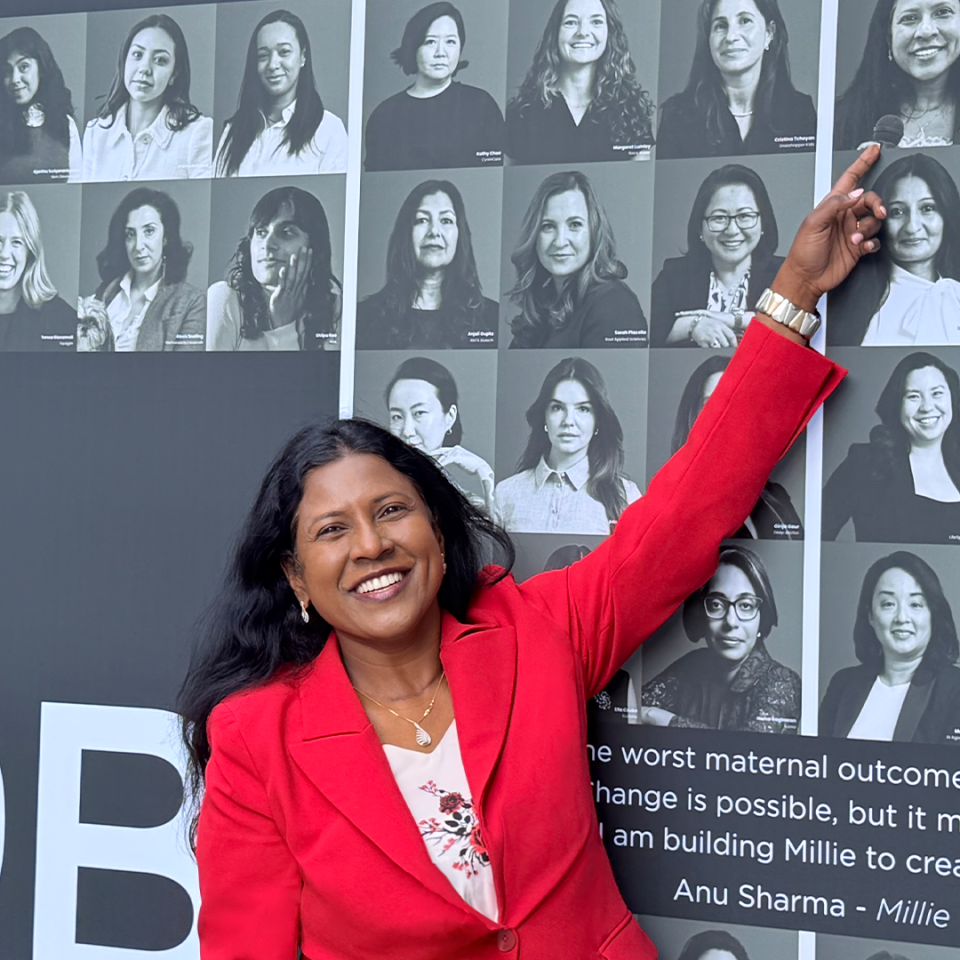
Anu Ramraj, Chief Executive Officer (CEO) and Co-Founder of Vaultzy Inc and a former partner in PwC’s Cloud and AI practice, has spent more than 25 years leading AI and cloud transformations across highly regulated industries, and she has watched companies learn this lesson in the most expensive possible order. “Every AI strategy is at its core a data strategy,” she states. Treating privacy as something the legal team handles after the build is not cautious. It is a category error that comes due twice.
Privacy Is Not the Brake on AI. It Is the Load-Bearing Wall
The common framing pits privacy against progress, casting it as a constraint that slows innovation down; a box to be checked once the exciting work is done. That framing has the architecture exactly backward. AI is only as good as the data powering it, and so the privacy posture is not a limit imposed on the strategy from the outside. It is a structural property of the strategy itself, as fundamental to whether the system stands as a load-bearing wall as to whether a building stands.
This is why Ramraj argues privacy built in from the start is a competitive advantage rather than a tax on speed. “When you build privacy into your architecture from day one, you move faster, you avoid costly redesigns,” she explains. A company that designs for privacy from the first line of architecture never has to stop and rebuild when scrutiny arrives, while a company that bolted it on as an afterthought discovers the load-bearing wall is missing precisely when the weight comes on.
A Bolt-On Failure Comes Due Twice
The reason deferring privacy is so dangerous is that the bill arrives in two separate currencies, and the second is far harder to pay than the first. The first cost is architectural. A system designed without privacy at its core has to be rebuilt to accommodate it later, an expensive redesign that competitors who built correctly never have to fund. That cost is painful, but at least it is the kind of problem money and engineering time can solve.
The second cost is the one that does not respond to a sprint timeline. When data is mishandled, what breaks is trust, and customers, employees, and partners are watching how their information is used more closely than they ever have. Trust, once broken, does not get redesigned in a quarter. It is rebuilt slowly, if at all, over the years, while the organization operates under a suspicion that taints everything it does next. This is the asymmetry leaders consistently underestimate. The architectural risk of skipping privacy is recoverable. The trust risk is not, and it is the one that determines whether a company has a future in the markets it wants to serve.
The Stakes Are Highest Where the People Are Most Vulnerable
There is a dimension to this that no balance sheet captures. The consequences of careless AI fall hardest on the people least able to absorb them. Foster youth, seniors, families in crisis, and the communities Vaultzy serves are not in a position to protect themselves from the mishandling of their most sensitive information. This means responsible AI leaders carry an obligation to think as hard about protection as they do about capability.
Privacy is not a legal requirement to be satisfied and forgotten. It is a design principle and a leadership value, a decision a company makes about who it intends to be before it ever ships a product. “That commitment is what separates organizations that earn lasting trust from those that spend years trying to rebuild it,” Ramraj observes. The foundation question was never technical. It is whether a company decides, before it builds anything, that the people behind its data are worth protecting. That decision is the architecture, and it is the trust, and in the end, it is the whole strategy.
Follow Anu Ramraj on LinkedIn or visit Vaultzy Inc for more insights on privacy-first AI, responsible data architecture, and building the trust that lasting AI strategies depend on.