

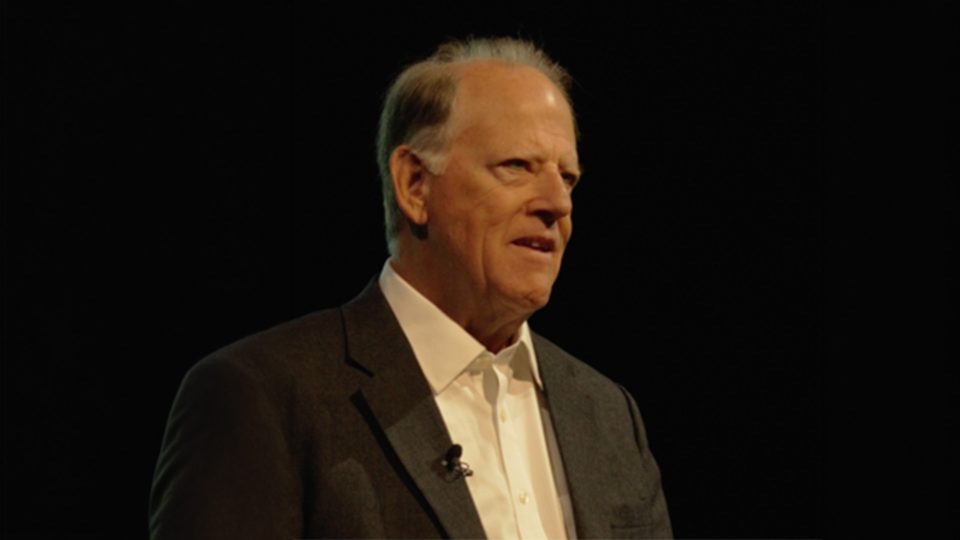




Most organizations are not failing at AI because of the technology – they are failing because they are treating a process redesign problem like a software purchase. Andrea N. Grant, operational strategist, fractional chief operating officer (COO), and founder of six proprietary leadership frameworks, has spent 30 years diagnosing the gap between what leaders think they are solving and what is broken. Her assessment of where AI initiatives collapse is precise, and it starts earlier than most executives expect. “You cannot purchase your way into transformation,” Grant says. “You have to design it.”
The First 90 Days Are Where AI Initiatives Die
The moment an organization buys an AI platform without redesigning the workflows it is meant to support, the outcome is already determined. Leaders invest in the tool, but they skip the design. Within the first 90 days, they discover they have layered sophisticated technology on top of broken processes. “If you move forward without giving thought to the design or redesign of the workflow, you’ve got AI sitting on top of what’s already broken,” Grant says. “Now you’re just making bad decisions faster and at a greater scale, probably for a lot more money.”
Why Only 39% of Companies See ROI From AI
McKinsey’s finding that only 39% of companies see measurable profit from AI – despite record spending – is not a technology indictment. (The state of AI in 2025: Agents, innovation, and transformation, McKinsey & Company, November 2025.) Grant identifies three structural failures that explain the gap, failures she has observed consistently through three decades of operational experience:
1. The first is the absence of a real process owner. AI gets assigned to IT, handed to the employee who writes the best prompts, or elevated under an inflated title with no operational authority. The result is no workflows, no accountability, and no defined outcomes. “There’s no real process owner,” Grant says. “That means no workflows, no accountability, no real goal or desired outcomes in mind, and so the operating model doesn’t change.”
2. The second failure is the mismatch measurement. Organizations measure return on investment (ROI) against the cost of the tool rather than the full cost of implementation. An organization spending $200,000 on an AI platform can easily absorb $2 million in total costs when lost productivity, inadequate training, and rising AI-related litigation are factored in. The math looks nothing like the business case that justified the purchase.
3. The third failure is the one that undermines everything else. “Implementation plans are 90% technical and 10% human,” Grant says. “That is completely backwards.” Roles are changing. Organizational and individual accountability for AI is increasing. The companies making up the 61% identified by McKinsey are the ones that invested in technology and skipped the people. “The ROI gap in AI is not a technology problem,” Grant says. “It is an operations and change management problem wearing a technology costume.”
Slow Decisions Are Not Safe Decisions
Grant’s DACI Decision Velocity Framework™ illustrates precisely what AI makes possible when the operational design is right. DACI™ defines four roles:
- Driver (process owner).
- Approver (actual decision maker).
- Contributors (a small number of advisors, not everyone).
- Informed (broader stakeholders).
The framework eliminates what Grant calls consensus theater, the cultural pattern where everyone wants a vote and a voice, and decisions that should take days take weeks instead. She has seen the cost of that pattern play out in concrete terms. An organization lost a $250,000 deal because its leaders wanted every stakeholder to feel included in the decision. By the time the decision was made, the opportunity was gone.
“Slow decisions are not safe decisions,” Grant says. With DACI™ properly implemented and AI accelerating the decision architecture, organizations that typically take two to four weeks to reach a decision can reach it in two to four days. The competitive implication in fast-moving markets is significant.
AI Exposes the Architects
The counterintuitive conclusion Grant reaches about the fractional COO role in an AI-driven market is one that reframes the entire conversation about automation and obsolescence. AI does not make the fractional COO less necessary. It makes the role more necessary for those who understand what the role requires.
The value of the fractional COO is operational judgment: knowing which processes to automate, which to redesign, which to protect from automation entirely, and how to provide the governance and oversight that cannot be prompted into existence. “You cannot prompt your way into operational judgment,” Grant says. The versions of the role that will become obsolete are those focused on task management, running standups, and process documentation, functions that AI is already absorbing. “AI does not threaten the fractional COO,” Grant says. “It exposes which ones were the operators and which ones were the architects all along.”
Clarity Before Speed
Every framework Grant has built and the entrepreneurial path she has pursued originates from the same foundational insight. Most leadership challenges are not execution problems. They are clarity problems. Leaders cannot see where the bottlenecks are, and if the problem cannot be named, it cannot be fixed, regardless of how fast the organization is moving. “Decisions can be fast,” Grant says, “but they cannot be fast enough to outpace the problem if you do not know what the problem actually is.”
AI accelerates execution. It does not replace the clarity required to ensure that execution is pointed in the right direction. That clarity remains the most valuable, least automatable, and most consistently underinvested asset in any organization navigating transformation.