
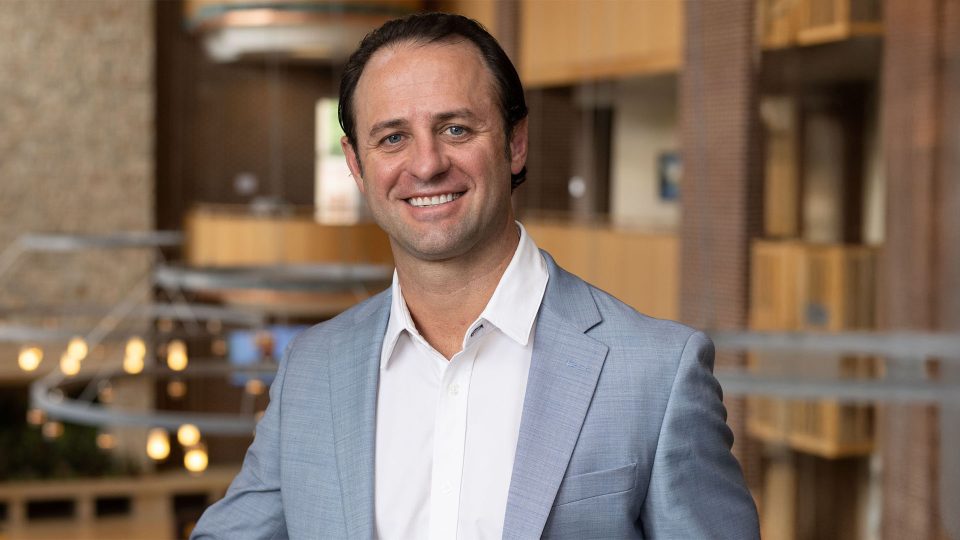





The companies pulling ahead right now are not competing on product alone. They are competing on experience, and the gap between those who have figured that out and those still catching up is widening by the quarter. Joshua Farley, Chief Revenue Officer (CRO) at BestMow and a global sales and marketing leader with over 25 years of experience, has built his career on one conviction: customer experience is the ultimate differentiator. AI, in his view, is not changing that truth. It is accelerating it in ways that are already separating winners from everyone else. “Winning companies are not just delivering products,” Farley says. “They are delivering experiences that feel effortless, personal, and proactive.”
Personalization at Scale Is No Longer Optional
Customer expectations have fundamentally shifted. Consumers no longer benchmark their experience against competitors in the same category. They benchmark it against the best experience they have ever had, anywhere. That raises the bar for every business, in every industry, regardless of what they sell.
AI is what makes meeting that bar operationally feasible. “Customers expect you to know them and anticipate their needs,” Farley says. “AI enables that at scale.” At BestMow, this is not a theoretical capability. The company’s systems learn individual lawn patterns, adjust for weather conditions, and optimize performance continuously so that the customer never has to think about the service at all. The experience simply works, without friction, without effort, and without the customer having to ask.
“In any industry,” Farley says, “AI allows you to deliver tailored experiences without adding complexity.” That combination, personalization without operational burden, is what go-to-market innovation looks like in practice today.
From Reactive to Proactive Is Where Trust Is Built
The more significant competitive shift Farley identifies is not personalization. It is anticipation. Most organizations are still structured to respond to customer problems after they occur. The customer reports an issue, the team investigates, and a resolution follows. That model is no longer sufficient in an environment where customers have more choices and less patience than ever before. “The real power of AI is staying ahead of the customer instead of reacting to problems,” Farley says. “You solve them before they know what happens.”
At BestMow, this means using AI to predict maintenance needs and proactively engage customers before a problem surfaces. The operational mechanics vary by industry, but the strategic implication is universal. A business that consistently solves problems that its customers have not yet articulated is not just delivering good service, it is building the kind of trust that makes switching feel like a loss. “That shift from reactive to proactive turns good service into lasting trust,” Farley says. For CRO leadership focused on retention and lifetime value, that distinction is where revenue strategy and customer experience strategy converge.
AI Empowers People, It Does Not Replace Them
The concern that most organizations face when AI enters the room – in this case, the conversation around customer experience – is the same concern that follows every major development in technology: what happens to the people currently doing this work? Farley’s answer is direct, and it is grounded in what he has observed in practice rather than in theory. “AI is not replacing people,” he says. “It is empowering them.”
By automating the repetitive, low-judgment work that consumes significant portions of every customer-facing team’s day, and by surfacing real-time insights that would otherwise require hours of analysis, AI returns the most valuable resource in any organization, human attention, to the work that actually requires it. “Teams can focus on what matters most,” Farley says. “Listening, solving problems, and building relationships.” The result is not a smaller team doing the same work. It is a more capable team doing better work, with faster response times and stronger customer satisfaction as the measurable output.
The Standard Has Already Changed
The organizations still treating AI as a future consideration are not holding their position. They are falling behind relative to competitors who have already deployed it and are compounding the advantage with every passing quarter. “AI is not a future trend,” Farley says. “It is already redefining expectations.”
The question for revenue leaders is not whether AI will reshape customer experience in their industry. It already has. The question is how quickly they move from serving customers to genuinely delighting them, and whether they do it before or after the competition does.
Follow Joshua David Farley on LinkedIn or visit his website or company website for more insights on AI-powered revenue growth and customer experience strategy.
